What Golutra Is
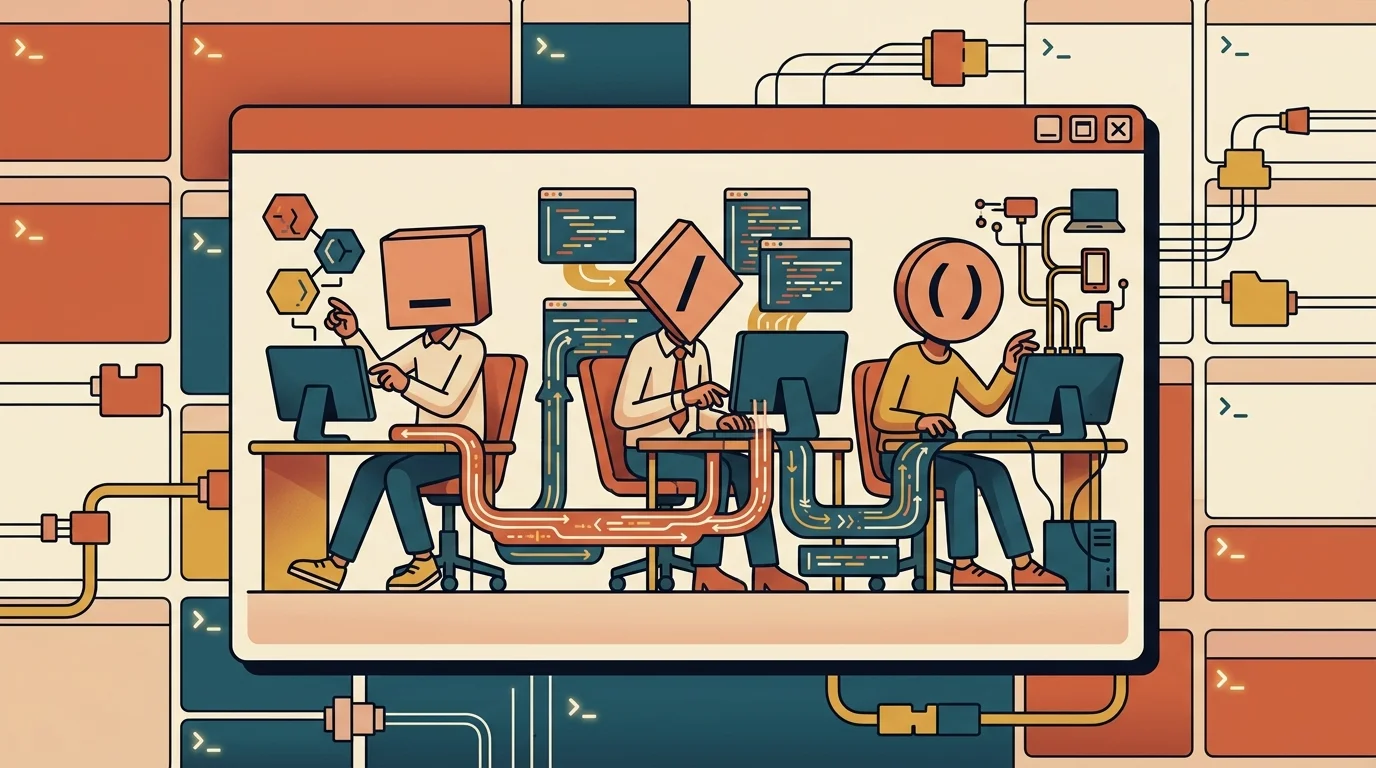
Golutra is an open-source desktop application that positions itself as a multi-agent orchestration layer for existing CLI-based AI coding tools. Rather than replacing tools such as Codex, Claude Code, and OpenClaw, the platform wraps them inside a unified workspace, allowing operators to coordinate multiple agents without abandoning familiar command-line interfaces [1].
The project is distributed through GitHub and targets Windows, macOS, and Linux, covering the full range of major desktop operating systems [1].
Core Architecture and Tech Stack
Golutra is built with Vue 3 on the frontend and Rust on the backend, packaged as a desktop application through the Tauri framework [1]. Tauri enables native desktop distribution while keeping the application footprint comparatively small relative to Electron-based alternatives, though the source materials do not provide specific binary size or performance benchmarks.
A central design principle of the architecture is CLI compatibility. The application wraps terminal streams from connected agents rather than requiring any project migration or command relearning. Operators interact with a visual interface that sits on top of those streams, with the ability to click agent avatars to inspect logs, inject prompts directly into terminal streams, or monitor execution while agents run in the background [1].
The project also includes a component called golutra-mcp, described as providing a more stable connection path for external tools and agents through golutra-cli, with the stated goal of making integration with MCP-based workflows more straightforward [1].
Parallel Execution and Workflow Engine
Golutra supports unlimited multi-agent parallel execution, replacing what the project describes as single-threaded, manual context switching with coordinated, simultaneous agent operation [1]. Multiple agents can run concurrently while the operator monitors real-time results through the unified interface.
The platform includes a workflow engine that allows operators to define custom workflows suited to specific scenarios. Workflow templates can be imported or exported in a single action, enabling teams to share, version, and reuse automation configurations [1]. The engine is designed for long-running automation rather than short interactive sessions, with orchestration described as spanning the full range from analysis to deployment [1].
Memory and Context Continuity
For long-running agent sessions, Golutra offers optional integration with EverOS as a memory layer. When connected, EverOS preserves project knowledge, context, and cross-task continuity across sessions [1]. The integration is described as optional, meaning operators can run Golutra without it for shorter or stateless workflows.
The source materials do not detail the internal mechanism by which EverOS stores or retrieves context, nor do they specify whether EverOS is a separate installation or bundled with Golutra.
Intended Use Cases and Target Users
Golutra’s stated use cases span a wide range of contexts. On the software development side, the platform targets solo developers operating what the project calls a “one-person AI company” model, as well as larger software teams requiring coordinated agent workflows [1].
Beyond software development, the project explicitly lists content production scenarios among its intended applications. These include automated novel writing, publishing workflows for platforms such as Xiaohongshu, and video production pipelines [1]. The breadth of listed scenarios reflects the platform’s positioning as a general-purpose multi-agent coordination layer rather than a tool narrowly scoped to code generation.
CLI compatibility extends beyond the three headline tools. The project lists Claude, Gemini, Codex, OpenCode, Qwen, and OpenClaw among supported CLI agents, with an open-ended indication that any CLI-based tool can be connected [1].
FAQ
Q. Does Golutra require migrating existing projects to a new format? No. The platform explicitly states that no project migration is required. It wraps existing CLI tools and terminal streams without changing how those tools are invoked [1].
Q. Is EverOS memory integration mandatory to use Golutra? EverOS integration is described as optional. Operators can run Golutra without it, though long-running sessions that require cross-task context continuity are the stated motivation for enabling it [1].
Q. Which operating systems does Golutra support? Golutra is distributed as a Tauri desktop application for Windows, macOS, and Linux [1].
Q. Can Golutra connect to AI agents beyond Codex, Claude Code, and OpenClaw? The project lists several additional CLI-compatible agents including Claude, Gemini, OpenCode, and Qwen, and indicates that any CLI-based tool can be integrated [1].
Q. How are workflow templates shared between team members? The platform supports one-click import and export of workflow templates, allowing teams to distribute and reuse automation configurations without manual reconstruction [1].
Key Takeaways
- Golutra is a Tauri-based desktop application built with Vue 3 and Rust that orchestrates multiple CLI AI agents, including Codex, Claude Code, and OpenClaw, from a single interface without requiring project migration [1].
- The platform supports unlimited parallel agent execution and includes a workflow engine with one-click template import and export for long-running automation [1].
- An optional EverOS memory layer integration preserves project knowledge and cross-task context across extended sessions [1].
- Supported CLI agents extend beyond the headline tools to include Claude, Gemini, OpenCode, Qwen, and others, with open-ended CLI compatibility stated [1].
- Golutra is available as open-source software on GitHub, targeting Windows, macOS, and Linux deployments [1].